
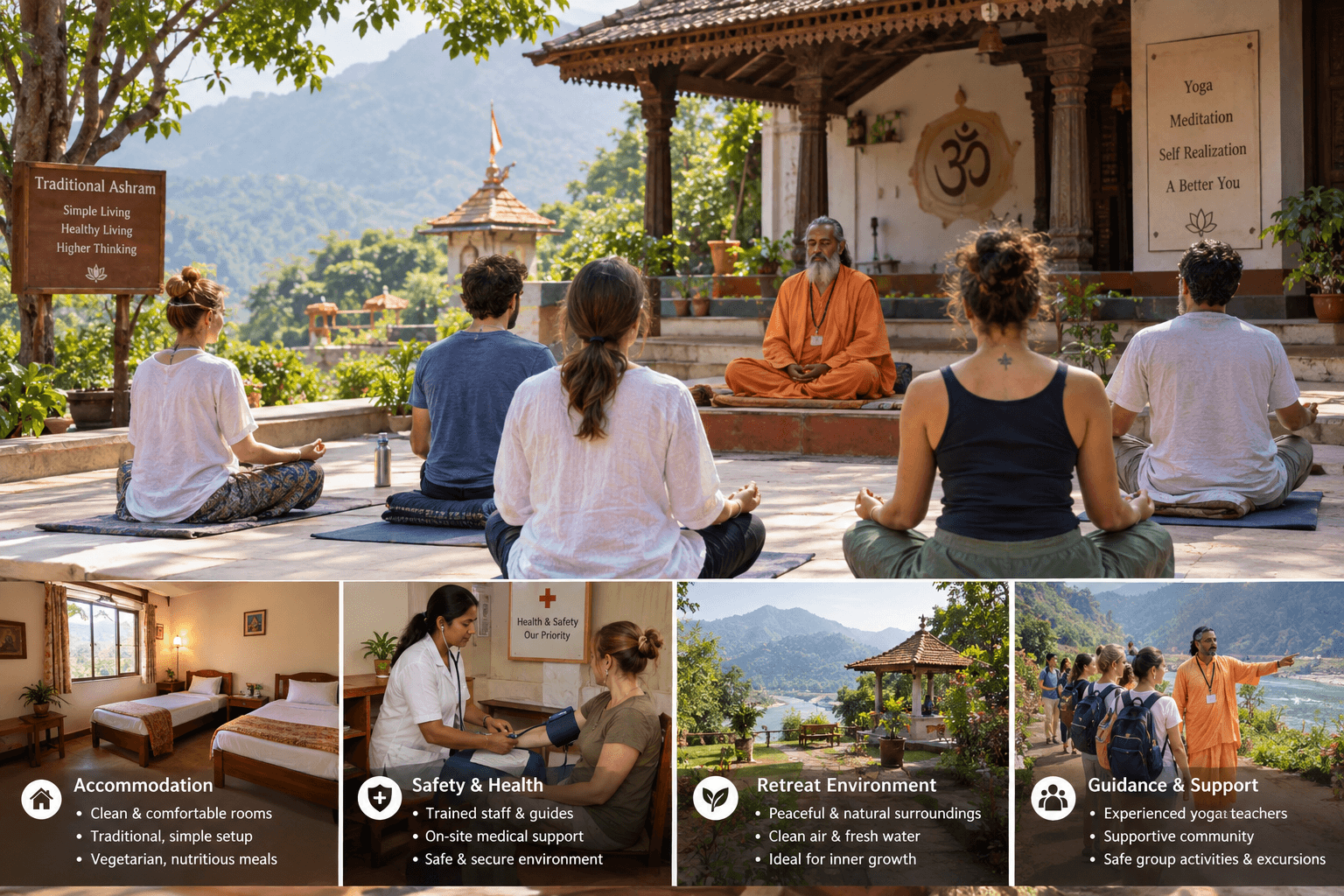
Common Safety Concerns & Realities: Yoga Retreat in India
A yoga retreat in India can sound like the perfect escape from everyday life. Imagine waking up to mountain views, practicing yoga before breakfast, enjoying freshly prepared vegetarian meals, and spending a few days away from constant notifications. For many travelers, that is exactly the experience they hope to find.
But there is another side to planning a retreat that deserves just as much attention: safety.
Common Safety Concerns & Realities: Yoga Retreat in India is a topic worth understanding before booking a flight or paying a retreat deposit. Questions about food hygiene, accommodation, personal security, yoga injuries, transportation, and unfamiliar surroundings are reasonable, particularly for first-time international visitors.
India has a long history of yoga practice and offers everything from traditional ashrams to modern wellness resorts. However, the quality of facilities, instruction, and safety arrangements varies considerably between providers.
The encouraging reality is that many travel-related risks can be reduced through careful research, sensible preparation, and realistic expectations.
This guide explores the concerns travelers commonly encounter, separates assumptions from practical realities, and explains how to make informed decisions before joining a yoga retreat in India.
Is a Yoga Retreat in India Safe?
A yoga retreat in India can be a safe and rewarding experience, but no destination or retreat can guarantee complete safety.
Much depends on where the retreat is located, how professionally it operates, the qualifications of its instructors, and the precautions taken by individual guests.
An established retreat with transparent policies, suitable accommodation, trained instructors, and reliable transportation may offer a more manageable experience than an unfamiliar facility with limited information.
It is also important to remember that India is geographically and culturally diverse. Conditions in a busy city, a remote Himalayan village, and a coastal resort can differ significantly.
| Common Concern | Practical Reality | Recommended Precaution |
|---|---|---|
| Personal security | Conditions vary by location and accommodation | Research the neighborhood and retreat |
| Food hygiene | Standards differ between facilities | Check kitchen practices and water sources |
| Yoga injuries | Poor technique or excessive intensity can cause injuries | Choose qualified instructors |
| Solo travel | Many people travel independently, but risks remain | Arrange trusted transportation |
| Accommodation | Comfort and cleanliness vary widely | Read recent independent reviews |
| Medical emergencies | Healthcare access may be limited in remote areas | Check nearby medical facilities |
| Scams and hidden charges | Misleading listings and unclear fees can occur | Confirm terms before payment |
The goal is not to eliminate every possible risk. It is to recognize the risks that matter and choose a retreat prepared to handle them.
1. Personal Safety: Understanding the Difference Between Fear and Reality
Personal security is often the first concern people raise when discussing travel to India.
Some travelers worry about theft, harassment, scams, or navigating unfamiliar streets. Others assume that a peaceful yoga environment automatically means there are no security concerns.
Neither assumption gives the complete picture.
A retreat may provide a calm, organized environment while the surrounding area still requires ordinary travel precautions. Similarly, isolated incidents reported do not describe every destination or every visitor's experience.
Before booking, investigate the retreat's exact location rather than relying on the name of the nearest famous city.
Look for clear information about staff availability, secure room access, transportation arrangements, and procedures for handling emergencies.
If a retreat is in a remote location, ask whether someone is available to assist guests outside scheduled class hours.
Practical safety habits include:
Keep your passport and important documents in a secure place.
Avoid displaying large amounts of cash or expensive belongings.
Share your itinerary with a trusted person.
Use transportation arranged through reputable providers.
Avoid walking alone in unfamiliar, poorly lit areas at night.
Save local emergency contacts and your accommodation's address.
These precautions are useful for international travel generally, not just yoga retreats in India.
2. Are Yoga Retreats in India Safe for Solo Female Travelers?
Solo female travelers may have additional questions about privacy, harassment, transportation, and accommodation.
Women travel independently to India for yoga, education, tourism, and wellness experiences. However, individual experiences vary, and it would be misleading to suggest that every destination offers the same level of safety.
For a first visit, a retreat with established guest procedures, recent independent reviews, and reliable airport transfers may be preferable to a facility that provides little information.
A women-only retreat might appeal to some visitors, but its marketing label alone is not proof of safety.
Ask whether private rooms are available, whether bedroom doors have functioning locks, and who can access residential areas.
It is also reasonable to ask about staff conduct policies, complaint procedures, and whether the retreat has a designated contact for guest concerns.
Pay attention to how the retreat responds.
A professional operator should answer reasonable safety questions without making guests feel uncomfortable for asking them.
One particularly useful precaution is to arrange your arrival during daylight hours whenever possible. Reaching an unfamiliar destination late at night can make navigation and transportation more difficult.
3. Food Hygiene and Drinking Water: A Genuine Health Consideration
Food is an important part of many Indian yoga retreats.
Some facilities serve traditional vegetarian meals, while others follow Ayurvedic-inspired menus or provide customized diets.
Freshly prepared food can be enjoyable and nutritious, but travelers should not assume that food is automatically hygienic because a retreat describes it as organic, natural, or sattvic.
Kitchen cleanliness, safe food storage, proper cooking temperatures, and clean drinking water matter more than promotional descriptions.
Visitors unfamiliar with local food and water conditions may experience gastrointestinal illness.
This can happen through contaminated water, improperly handled food, or exposure to unfamiliar pathogens.
How to reduce food-related risks
Choose a retreat that can clearly explain how drinking water is treated and how meals are prepared.
Use bottled water with intact seals or water treated by a reliable method. Avoid untreated water and be cautious with ice if its source is unknown.
Wash your hands before eating, and consider how food is stored and served, particularly in hot weather.
Travelers with food allergies should communicate their requirements before booking rather than assuming a vegetarian menu will accommodate every restriction.
Also, be cautious about retreats promoting extreme fasting, unverified detoxification programs, or restrictive diets as guaranteed methods of improving health.
A retreat should not require guests to ignore hunger, dehydration, or symptoms of illness in pursuit of spiritual progress.
4. Yoga Injuries: When a Wellness Holiday Becomes Physically Demanding
Yoga is often associated with relaxation, flexibility, and improved well-being.
However, yoga is still a physical activity, and some practices can be demanding.
Muscle strains, joint discomfort, falls, and overuse injuries may occur when participants attempt movements beyond their abilities.
A common mistake is choosing an intensive retreat without understanding its daily schedule.
For example, a program offering several hours of physically demanding yoga each day may not suit someone who practices occasionally.
What a responsible yoga instructor should do
An instructor should explain movements clearly, offer suitable modifications, and respect a participant's physical limitations.
They should not pressure guests into painful postures or insist that discomfort must be tolerated to achieve progress.
Before joining a retreat, ask about instructor training, class sizes, and whether beginner-friendly sessions are available.
If you have a medical condition, recent injury, pregnancy, or significant mobility limitation, consult an appropriate healthcare professional about which activities are suitable.
Avoid practices involving prolonged breath-holding, forceful breathing, or extreme postures unless you understand the risks and have appropriate guidance.
A meaningful yoga experience does not require performing the most difficult poses in the room.
5. Accommodation Safety: The Details That Beautiful Photos Cannot Show
Retreat advertisements often feature peaceful gardens, comfortable bedrooms, mountain scenery, and carefully arranged meditation spaces.
Those images may accurately represent the property, but they cannot tell you everything about its day-to-day operation.
A beautiful room is not necessarily well-maintained, and a remote location may present practical challenges.
Before booking, check whether the accommodation has reliable electricity, adequate ventilation, safe bathrooms, and secure entrances.
In some regions, seasonal humidity, heavy rainfall, or insects may affect comfort.
Remote retreats may also have limited mobile reception or unreliable internet connectivity.
That can be refreshing for someone seeking a digital break, but it becomes a concern when guests need to contact family or obtain assistance.
Recent reviews can be especially helpful when they describe cleanliness, staff responsiveness, and the condition of rooms.
Look beyond the overall rating. A retreat with excellent yoga classes but repeated complaints about sanitation or unsafe facilities deserves closer examination.
6. Location Matters: Rishikesh, Goa, Kerala, and Beyond
India offers several different settings for yoga retreats, and each has its own practical considerations.
Rishikesh: A traditional yoga destination
Rishikesh is widely associated with yoga, meditation, and spiritual travel.
<AsyncImageGroup query={["Rishikesh India yoga retreat Ganges river Himalayan foothills real photography","Goa India tropical yoga retreat beach resort real photography","Kerala India peaceful yoga retreat backwaters greenery real photography"]} aspectRatio="5:3" layout="carousel"/>
Its location near the Himalayan foothills attracts visitors interested in traditional practice and a quieter atmosphere.
However, travelers should consider road conditions, seasonal rainfall, river safety, and the accessibility of hillside accommodation.
A retreat near the Ganges should not automatically be treated as a safe place for swimming. River currents can be dangerous.
Goa: Coastal relaxation and yoga
Goa attracts travelers looking for a combination of yoga, beach life, and relaxation.
Some retreats are located near tourist areas, while others offer more secluded accommodation.
Visitors should consider beach conditions, strong currents, transportation after dark, and the security of their belongings.
A peaceful beach setting does not remove the need to follow local swimming warnings.
Kerala: Green landscapes and wellness traditions
Kerala is known for its tropical scenery, backwaters, and wellness tourism.
Its climate can be hot and humid, and heavy monsoon rainfall may affect travel plans.
When choosing a retreat here, consider mosquito protection, sanitation, transportation, and access to medical care.
Some facilities also offer Ayurvedic treatments. Travelers should verify practitioner qualifications and discuss possible risks or interactions before accepting herbal products or therapeutic procedures.
There is no universally safest yoga retreat destination in India. The better choice depends on the specific property, travel season, personal needs, and available services.
7. Medical Emergencies and Healthcare Access
Medical preparedness is of the most overlooked parts of retreat planning.
A yoga retreat may emphasize natural living, but it should still have practical arrangements for illness or injury.
This is especially important when the property is far from a major city.
Before booking, ask how the retreat handles medical emergencies and how long it typically takes to reach a suitable healthcare facility.
Travel insurance that covers relevant medical treatment and evacuation can be valuable, particularly for remote destinations.
Review the policy carefully because some insurers exclude certain activities, pre-existing conditions, or specific types of treatment.
Travelers should also carry an adequate supply of prescribed medicines in their original packaging, along with relevant prescription documentation.
Check Indian regulations before traveling with controlled or restricted medicines.
Do not discontinue prescribed treatment simply because a retreat promotes natural healing.
Yoga and meditation may support general well-being, but they should not be presented as replacements for necessary medical care.
8. Scams, Misleading Retreat Listings, and Hidden Charges
Not every retreat advertisement provides a complete picture of what guests will receive.
Some listings emphasize luxury, personal transformation, or spiritual authenticity while providing limited details about actual services.
Potential problems include misleading photographs, unclear refund policies, unexpected fees, or qualifications that cannot be verified.
A retreat might advertise a low package price while charging separately for accommodation upgrades, airport transfers, meals, excursions, or individual sessions.
Before paying, request a written breakdown of the package.
Confirm the total price, deposit requirements, cancellation policy, and services included.
Be cautious if an operator pressures you to pay immediately, refuses to provide written confirmation, or requests payment through an unusual channel without a reasonable explanation.
Search for independent reviews across multiple platforms rather than relying exclusively on testimonials published on the retreat's own website.
A trustworthy retreat should make its terms understandable before accepting payment.
9. Cultural Differences and Respectful Behavior
Yoga retreats in India may incorporate traditions that are unfamiliar to international visitors.
Some programs include chanting, meditation, temple visits, silence periods, or communal living.
These activities may be meaningful to participants, but expectations should be explained before arrival.
Travelers should understand whether attendance is optional, what clothing is appropriate, and whether the retreat follows particular religious or philosophical traditions.
Respect for local customs can make interactions more comfortable, but cultural sensitivity should never require guests to accept unsafe or inappropriate behavior.
A spiritual teacher's status does not remove the need for personal boundaries and professional conduct.
Participants should feel able to decline unwanted physical adjustments, private sessions, or activities that make them uncomfortable.
A responsible retreat should welcome questions and respect informed consent.
10. Weather, Mosquitoes, and Environmental Risks
India's climate varies considerably across regions and seasons.
High temperatures can increase the risk of dehydration and heat-related illness, particularly when yoga sessions take place outdoors.
Monsoon rainfall may disrupt transportation, increase the risk of flooding in some locations, and create slippery walking surfaces.
In mountainous areas, heavy rain can also contribute to landslides and road closures.
Mosquito-borne diseases are another consideration in certain regions and seasons.
Travelers should consult current destination-specific health guidance before departure and use suitable mosquito protection.
For outdoor practice, breathable clothing, shade, drinking water, and appropriate rest breaks can make a significant difference.
If you experience dizziness, unusual weakness, nausea, or other concerning symptoms during exercise in the heat, stop the activity and seek appropriate assistance.
Do not assume that feeling unwell is simply part of a cleansing or detoxification process.
11. What About Meditation, Silence, and Emotional Well-Being?
Not every retreat is physically demanding.
Some focus on meditation, breathwork, extended silence, or intensive personal reflection.
These experiences can feel restorative for some people, but they may also be emotionally challenging.
Long periods of silence, unfamiliar routines, disrupted sleep, and intensive meditation are not necessarily suitable for everyone.
Retreats sometimes advertise emotional healing or life-changing transformations. Such claims should be approached thoughtfully, particularly when they promise outcomes that cannot be guaranteed.
Ask about the daily schedule, rest periods, participant support, and whether guests can opt out of activities.
People with relevant mental health concerns should discuss intensive meditation or breathwork programs with an appropriate healthcare professional beforehand.
A supportive retreat should not discourage participants from seeking professional help when needed.
12. How to Choose a Safer Yoga Retreat in India
Choosing the right retreat involves more than comparing photographs and prices.
A useful approach is to evaluate the facility as you would any other accommodation and wellness service.
Pay particular attention to communication. Operators who answer questions clearly and provide consistent information make it easier to assess what you are purchasing.
| What to Check | Questions Worth Asking |
|---|---|
| Instructor qualifications | Who teaches the classes, and what training have they completed? |
| Guest accommodation | Are rooms secure, clean, and accurately represented? |
| Food and water | What drinking-water treatment and food hygiene practices are used? |
| Emergency arrangements | Is first aid available, and where is the nearest suitable hospital? |
| Transportation | Can reliable airport or station transfers be arranged? |
| Program intensity | Are beginner modifications and rest days available? |
| Pricing | Which meals, classes, treatments, and transfers are included? |
| Refund policy | What happens if the trip is canceled or interrupted? |
| Guest protection | How are complaints, harassment, and privacy concerns handled? |
It is worth contacting two or three retreats before making a final decision.
Their responses may reveal differences that are not obvious from promotional material.
For first-time visitors, a shorter retreat can also be a practical introduction before committing to a lengthy residential program.
13. Common Myths About Yoga Retreat Safety in India
Several popular assumptions can influence how travelers judge retreat safety.
Myth: All yoga retreats in India follow the same standards.
Reality: Facilities, instructor qualifications, accommodation, and guest protection procedures vary considerably. A retreat's location in India does not establish its quality.
Myth: A luxury retreat is always safer than a budget ashram.
Reality: Higher prices may provide additional amenities, but they do not automatically guarantee better instruction, hygiene, or emergency preparedness.
Myth: Traditional yoga practices cannot cause injuries.
Reality: Any physical practice can carry risks when performed incorrectly or without regard for individual limitations.
Myth: A spiritual environment guarantees ethical behavior.
Reality: Professional boundaries, informed consent, and transparent complaint procedures remain important in spiritual and wellness settings.
Myth: Natural treatments are always harmless.
Reality: Herbal preparations, restrictive diets, and certain wellness treatments can cause adverse effects or interact with medicines.
Understanding these distinctions helps travelers make decisions based on evidence and practical considerations rather than stereotypes or marketing claims.
14. A Practical Safety Checklist Before Departure
Once you have selected a retreat, a little preparation can prevent unnecessary complications.
Start by confirming your passport validity, visa requirements, travel arrangements, and insurance coverage.
Review official travel advisories and health recommendations for the specific region you plan to visit. Conditions can change, especially during periods of severe weather or local disruption.
Save copies of your booking confirmation, identification documents, and insurance details in a secure location.
Keep essential medication and a few basic personal supplies accessible during your journey.
Share your accommodation details and expected arrival time with someone you trust.
You should also confirm the retreat's exact address and transportation instructions before landing in India.
Avoid relying entirely on mobile internet access, particularly when traveling to remote areas.
Finally, approach the experience with flexibility.
A yoga retreat does not need to be physically exhausting, spiritually intense, or completely disconnected from modern life to be worthwhile.
The most suitable program is that respects your health, comfort, and personal goals.
Frequently Asked Questions
Is a yoga retreat in India safe for beginners?
Many retreats offer beginner-level classes, but safety depends on the instructor, program intensity, and individual health considerations. Beginners should choose a program that provides clear guidance, modifications, and sufficient rest.
Is Rishikesh safe for a yoga retreat?
Rishikesh is a well-known yoga destination, but safety varies by accommodation, neighborhood, season, and activity. Travelers should research their specific retreat, arrange reliable transportation, and follow local weather and river-safety warnings.
Can I attend a yoga retreat in India alone?
Yes, solo travelers can attend yoga retreats in India. Choosing an established facility, reviewing accommodation security, sharing travel plans, and arranging reliable transfers can help reduce avoidable risks.
What should I avoid during a yoga retreat?
Avoid pushing through pain, drinking untreated water, participating in activities beyond your physical abilities, and accepting unverified medical or detoxification claims. Respect your personal boundaries and seek medical advice when appropriate.
Do yoga retreats in India provide medical assistance?
Some facilities have first-aid arrangements or relationships with nearby healthcare providers, while others offer limited support. Always confirm the retreat's emergency procedures before booking, especially in remote locations.
What is the best time to visit India for a yoga retreat?
The ideal season depends on the destination. Weather conditions differ between Rishikesh, Goa, Kerala, and other regions. Check local climate patterns, monsoon conditions, and current travel advisories when choosing dates.
Final Thoughts
The reality behind common safety concerns about yoga retreats in India is more balanced than either frightening travel stories or perfect-looking wellness advertisements might suggest.
India offers a wide variety of yoga experiences, including traditional instruction, meditation-focused programs, and modern wellness accommodation. Many travelers find these experiences personally meaningful, but outcomes and conditions vary.
The important question is not whether every yoga retreat in India is safe. It is whether the particular retreat you are considering has appropriate standards, clear policies, qualified staff, and arrangements that match your needs.
Take time to research the destination, ask practical questions, understand the program, and prepare for ordinary travel and health risks.
A well-chosen yoga retreat should give you the freedom to focus on your experience without ignoring your personal safety.
Editorial note: This article provides general travel and wellness information, not individualized medical or security advice. Consult official travel advisories, destination-specific health guidance, and qualified healthcare professionals where appropriate.